Complete Puzzle: Draw One Part
- 4.3
- Rating
- 10.00M
- Installs
- Free
- Price
 Analysis by App-foxy
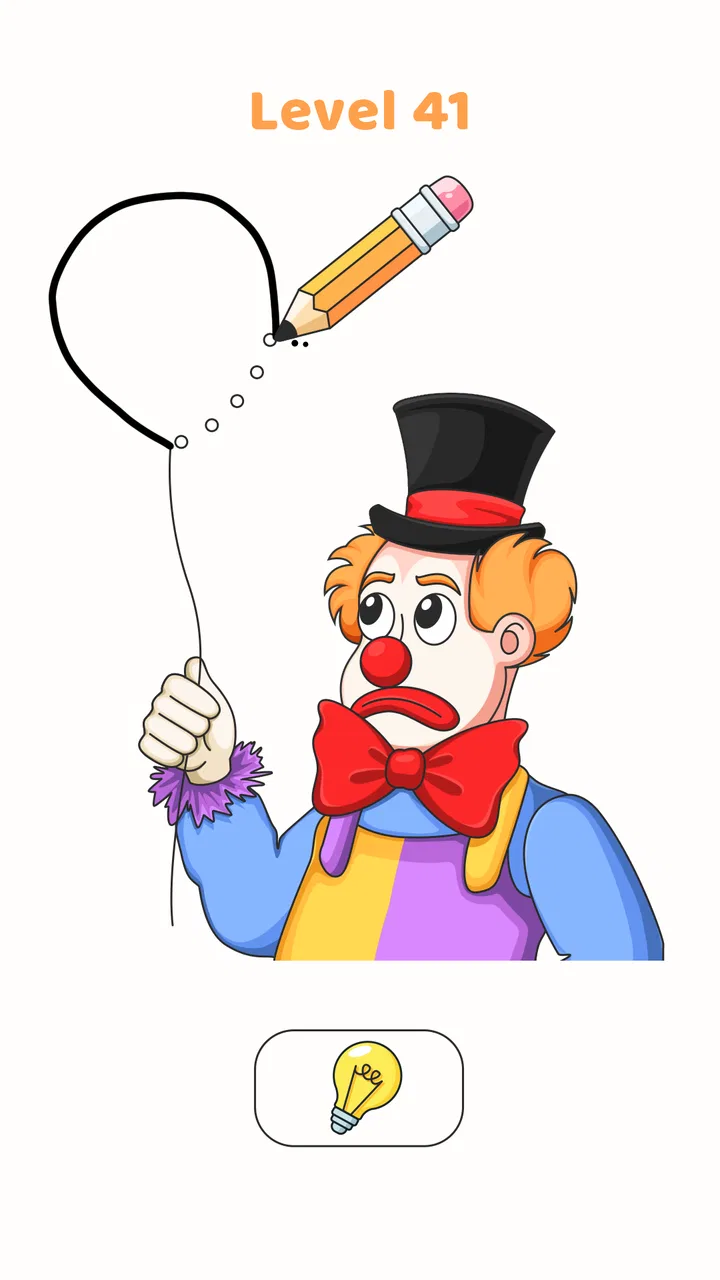
I went into Complete Puzzle: Draw One Part expecting a quick sketching distraction, and that is exactly where it works best. This is a free puzzle game from The Fashion Valley built around a simple visual challenge: an image is missing one part, and I have to draw the piece that makes the scene feel complete. The idea is immediately understandable, but the small act of deciding what belongs in the empty space gives each level a pleasant moment of interpretation.
What makes the game appealing is its low barrier to entry. I do not need to learn a complicated control scheme, manage a character, or remember a long story. I look at the picture, identify the missing element, and use my finger to supply it. That makes it a natural choice for short breaks, especially when I want something more active than scrolling but less demanding than a traditional strategy puzzle.
The game is listed as free, with optional in-app purchases ranging from $0.99 to $5.99 per item. It is rated for Everyone, and its broad age suitability matches the friendly, non-threatening presentation. With a 4.0 average from around 22 thousand ratings and over 10 million installs, it has clearly found a sizeable audience. I can understand why: the central interaction is easy to explain in one sentence, yet it still creates a small reward when my drawing completes the picture.
You May Also Like

 Blood Strike: 2.5 Anniversary
Blood Strike’s Loadouts Turn Every Drop Into a Tactical Gamble
A close look at Blood Strike’s custom loadouts: how fast access to signature weapons reshapes its battle royale rhythm, rewards preparation, and narrows the gap between fights.

 Pandora - Music & Podcasts
Pandora’s Music Is Easy to Start, but Harder to Recover
Pandora’s strength is its low-effort path from a seed to a station. Its weak spot is how much confidence it asks you to place in connection, setup, and quiet recovery.

 8 Ball Pool
 Is Built on Rivalries, Rematches, and Routine
A close look at the rivalries, rematches, shared routines, and unanswered safety questions that turn a quick pool match into a persistent mobile community.

 Samsung Music
’s Quiet Strength Is Playing What You Already Own
Its reach comes less from spectacle than from dependable access to a personal library. That simplicity is both the app’s strongest retention engine and its ceiling.

 AccuWeather: Weather Radar
AccuWeather Review: A Quick, Clear Forecast for Everyday Decisions
For everyday plans, the best forecast is the one you can understand quickly. AccuWeather makes rain timing, radar, and local conditions easy to act on, with a few trade-offs.

 Hill Climb Racing
Why Hill Climb Racing Still Turns Crashes Into One More Run
A tiny car, a bumpy hill and one more upgrade: Hill Climb Racing keeps resurfacing because its simple chaos makes every near-miss feel personal.
More From Our News Desk



How the visual language turns a simple idea into a playable mood
I find the visual language most effective when I treat each scene as a clue rather than a blank canvas: the surrounding shapes, spacing, and subject help narrow down what belongs in the gap. That makes a useful habit to carry from puzzle to puzzle—pause, read the whole composition, then draw only the detail the image seems to need.
A first impression built around curiosity
The strongest opening quality is clarity. The incomplete image gives me a question before I even touch the screen: what should be here? That question is more important than artistic skill. I am not being asked to create a beautiful illustration from nothing; I am being asked to notice the visual logic of an existing scene and respond to it.
That distinction makes the game feel welcoming. Someone who rarely draws on a phone can still participate because the objective is not polished artwork. The drawing is a tool for solving the picture, not a test of whether I can reproduce a professional illustration. I found that encouraging because it removes the self-consciousness that can come with drawing games.
The first few puzzles are best approached slowly rather than as reflex challenges. I look at the outline, compare the surrounding shapes, and think about what would naturally complete the composition. A missing object may be obvious, but the satisfying part comes from recognizing why it belongs there. The game therefore creates a small loop of observation, decision, drawing, and visual confirmation.
That loop also explains why it suits a mixed-age audience. Younger players can enjoy the act of drawing, while adults may appreciate the quick visual reasoning. It can work as a casual family game, although I would still treat it as a light entertainment title rather than a deep shared activity. The appeal is in solving one image at a time, not in building a long-term cooperative experience.
The setting is carried by pictures rather than a story
There is no need for a large fictional world to make the concept understandable. Each scene supplies its own setting through the objects and relationships inside the image. The environment is therefore compact and self-contained: I enter a visual situation, identify the missing detail, and leave once the picture makes sense again.
This approach keeps attention on the puzzle. A story-heavy game might use dialogue, characters, or map progression to create context, but here the context is visible at a glance. That is a good fit for the short-session format. I can open the game without remembering plot details from a previous visit, because the next challenge presents its own visual problem.
The trade-off is that players looking for a rich narrative or a persistent world will probably find the presentation too light. The scenes provide atmosphere through composition, not through lore. I would choose this over a story-driven puzzle game when I want immediate play, but I would choose the story-driven alternative when I want emotional character development or a reason to keep returning beyond the next challenge.
Why the drawing does not need to look perfect
One of the more useful ways to approach the game is to think of the missing part as a visual suggestion. I do not need to fill the space with elaborate detail. I need to provide a recognizable form that agrees with the rest of the scene. This changes how I use the drawing area: broad, deliberate strokes are often more useful than trying to imitate every tiny contour.
My practical tip is to study the neighboring objects before drawing. Their size, angle, and position often tell me more than the empty area itself. If I rush directly into sketching, I can produce something that seems plausible in isolation but does not fit the scene. Taking a second to inspect the balance of the full image makes the solution feel more intentional.
This is also where the game’s visual design and mechanics meet. The picture is not merely decoration around a drawing tool. It acts as the clue, the setting, and the feedback system at once. When the missing element appears to belong naturally, the mood shifts from uncertainty to completion without needing a complicated explanation.
Sound and rhythm keep the experience gentle
The game’s mood depends heavily on restraint. A drawing puzzle like this benefits from a calm rhythm because the player needs a moment to inspect the scene. If the presentation were aggressive or overloaded with interruptions, the central pleasure of noticing the missing part would be weakened.
In my experience, the pacing feels designed for brief concentration rather than sustained pressure. I can approach a puzzle, make a guess, and move on without feeling that I have entered a demanding timed contest. That makes the game comfortable for a commute, a short wait, or the few minutes before bed when I want something interactive but not stressful.
The sound design works best when it supports the act of completion instead of competing with it. The important rhythm is the sequence of looking, drawing, and seeing whether the image now reads correctly. Even when the individual action is tiny, the feedback gives the level a beginning and an end. That sense of closure is what encourages one more puzzle.
There is a limitation to this gentle approach. Players who prefer energetic effects, dramatic music, or escalating urgency may find the experience subdued. The atmosphere is coherent, but it is not trying to create excitement through speed. I would not recommend it as a replacement for a fast arcade game; its pleasure comes from quiet visual problem-solving.
Where the mechanics fit the mood
The core mechanic is unusually well matched to the presentation because the player’s action directly changes the image being examined. In many puzzle games, the setting can feel separate from the rules. Here, the picture is both the world and the problem. Drawing is not an extra mini-game placed on top of the artwork; it is the way I interact with the scene.
That connection keeps the controls easy to understand. I do not have to switch between several tools or learn a complex sequence of gestures. The simplicity also makes the game approachable for people who are not regular puzzle players. If someone can identify a missing visual piece and draw a rough version of it, they can begin immediately.
Still, simple controls do not mean every puzzle is equally effortless. The challenge can come from ambiguity rather than dexterity. Sometimes I may see several things that could fit the empty space, and the task becomes deciding which one the scene is asking for. That is a useful distinction for prospective players: the game is better suited to visual inference than to precise drawing technique.
A good workflow is to make the smallest sensible attempt first. I avoid decorating the scene or adding multiple interpretations at once. A focused drawing gives me a clearer sense of whether I understood the composition. If my first idea fails, I can reconsider the relationship between the missing area and the surrounding objects rather than blaming the drawing itself.
Progression, repetition, and the right session length
The game is most effective in short sessions because its central idea is immediately satisfying but not endlessly complex. I can play a few puzzles during a spare moment and feel that I have completed something. That is a meaningful strength for a mobile title, especially for people who do not want to commit to a long campaign every time they open a game.
At the same time, the repeated structure can become familiar. The basic cycle remains: inspect an incomplete picture, draw the missing part, and continue. Players who need constantly changing systems may eventually want more variety than this format provides. For me, the repetition is acceptable when I treat the game as a casual mental reset, but less convincing when I expect a deep puzzle ladder.
This is where comparison with usual alternatives becomes useful. A traditional match-three game usually rewards pattern recognition through repeated board manipulation, while a word puzzle relies on language and recall. Complete Puzzle takes a more visual and expressive route. Compared with those games, it asks less of my memory and more of my ability to read an image. Compared with a free-drawing app, however, it gives my sketching a clear purpose and a defined answer.
I would choose this game over a standard puzzle board when I want a more relaxed, picture-based task. I would choose a conventional logic game when I want rules that can be analyzed several steps ahead. The difference is not a weakness in itself; it simply determines who will get the most from the experience.
Small practical details worth knowing before playing
The title is free to start, which makes it easy to test without committing money upfront. Optional purchases sit between $0.99 and $5.99 per item, so anyone sensitive to spending should check the purchase prompts carefully and decide in advance whether the free experience is enough. I appreciate having a low-risk way to try the central mechanic, but I would not treat optional purchases as part of the puzzle-solving skill itself.
The game is suitable for Everyone and requires Android 8.0 or later. That makes the compatibility requirement worth checking before installing on an older device. It was released on June 3, 2025, and the current version is 1.1.1, details that matter to anyone comparing it with other recent casual puzzle options.
The developer is The Fashion Valley, and the title’s popularity suggests that the concept has broad reach rather than being aimed at a narrow puzzle audience. Even so, popularity should not be confused with universal fit. If I wanted competitive rankings, elaborate customization, or a detailed narrative, I would look elsewhere. If I wanted a friendly visual challenge that explains itself quickly, this is much closer to what I would recommend.
Another useful consideration is the role of patience. The game rewards looking before acting, so it is not ideal for someone who taps through instructions or expects every level to be solved by instinct. I get better results when I treat each image like a small composition: identify the main subject, notice what seems incomplete, and then draw only what the scene needs.
Who should make room for it on a phone
I would recommend it to casual players who enjoy visual riddles, parents looking for an approachable game with an Everyone age rating, and anyone who likes the feeling of completing an image without learning a complicated system. It is also a good fit for people who enjoy drawing but prefer prompts to a blank canvas. The prompt provides direction while still leaving a little room for personal interpretation.
It is less suitable for players who want demanding logic, fast action, or a strong narrative arc. People who become bored with repeated one-picture challenges may also prefer a puzzle game with several distinct modes. The most honest expectation is that this is a focused casual experience: its charm comes from doing one small visual repair after another.
For an everyday scenario, I can see myself opening it while waiting for an appointment. I do not need headphones, a long uninterrupted block of time, or a detailed memory of previous levels. I can inspect one scene, try a drawing, and stop when my name is called. That kind of interruption-friendly design is more valuable than it sounds, because many mobile games punish players for leaving mid-session.
It can also work as a low-pressure wind-down game. The visual task gives my attention somewhere to go, while the relaxed pacing avoids the frustration that can come from losing progress in a competitive title. I would still avoid treating it as a serious brain-training tool. Its value is entertainment and light observation, not a formal learning program.
My verdict on the complete picture
What I like most is the consistency between art direction, sound, pacing, and interaction. The incomplete scenes create curiosity, the drawing mechanic resolves that curiosity, and the calm rhythm gives each solution room to land. Nothing needs to be excessively dramatic because the central pleasure is small and clear: I notice what is missing and help the picture make sense.
The limitations are equally clear. The format may feel repetitive for dedicated puzzle fans, the challenge is more about visual interpretation than deep logic, and the gentle mood will not satisfy anyone seeking speed or spectacle. Optional purchases also mean I would pay attention to prompts rather than assuming every part of the experience is equally free.
For me, the game succeeds when I approach it as a pocket-sized drawing puzzle rather than a full-scale adventure. The free entry point, Everyone rating, accessible controls, and short-session structure make it easy to recommend to the right person. If you enjoy completing pictures more than competing for speed, this is a genuinely pleasant choice. I would install it for relaxed breaks, keep my expectations focused on visual problem-solving, and choose a more complex alternative only when I want deeper strategy or a richer world.
FAQs for Complete Puzzle: Draw One Part
01What is Complete Puzzle: Draw One Part about?
Complete Puzzle: Draw One Part is a creative and engaging puzzle game where players must use their imagination to complete drawings. Each level presents a partially drawn picture, and the player’s task is to finish it by drawing the missing part. It’s a fun way to challenge your artistic skills and problem-solving abilities.
02Is Complete Puzzle: Draw One Part suitable for all ages?
Yes, Complete Puzzle: Draw One Part is designed to be enjoyed by players of all ages. The intuitive interface and simple mechanics make it accessible for children, while the increasing complexity of the puzzles can also engage adults. It’s a family-friendly game that encourages creativity and critical thinking.
03Does Complete Puzzle: Draw One Part require an internet connection?
No, Complete Puzzle: Draw One Part can be played offline. This makes it a great option for entertainment when you’re on the go or in areas with limited connectivity. However, an internet connection may be required for downloading updates or accessing additional features.
04Are there in-app purchases in Complete Puzzle: Draw One Part?
Yes, Complete Puzzle: Draw One Part offers in-app purchases. While the game is free to download and play, players have the option to purchase hints or additional content. These purchases are not necessary to enjoy the full game but can enhance the experience for those who desire extra help or content.
05Can I play Complete Puzzle: Draw One Part on both Android and iOS devices?
Yes, Complete Puzzle: Draw One Part is available for both Android and iOS platforms. You can download it from the Google Play Store for Android devices and the App Store for iOS devices. This cross-platform availability ensures that a wide range of users can enjoy the game.
Pros
- Intuitive controls make gameplay easy.
- Creative puzzles challenge your mind.
- Regular updates add new levels.
- Appealing graphics enhance experience.
- Suitable for all ages and skill levels.
Cons
- Ads can disrupt the gaming experience.
- Some puzzles feel repetitive.
- Limited hints can be frustrating.
- Occasional bugs affect gameplay.
- Requires internet for certain features.

Complete Puzzle: Draw One Part
Gallery